Recovery is a key part of staying active in sport and recreation. Whether you play rugby, netball, football or cricket, or spend your time running, cycling, tramping or training at the gym, your body needs time and support to adapt to the demands of activity.
At Roslyn Physiotherapy, we regularly see athletes and recreationally active people who are training hard but not recovering well. Getting recovery right helps the body repair, adapt, and stay resilient across a season.
Training places stress on muscles, tendons, joints and the nervous system. That stress is how the body improves, but only when recovery keeps up.
When recovery falls behind, people often notice:
ongoing muscle soreness
fatigue or heavy legs
reduced performance
poor sleep
recurring niggles or injuries
Many people assume they simply need to train harder. In many cases, improving recovery habits is the missing piece.
The most effective recovery strategies are usually simple and consistent.
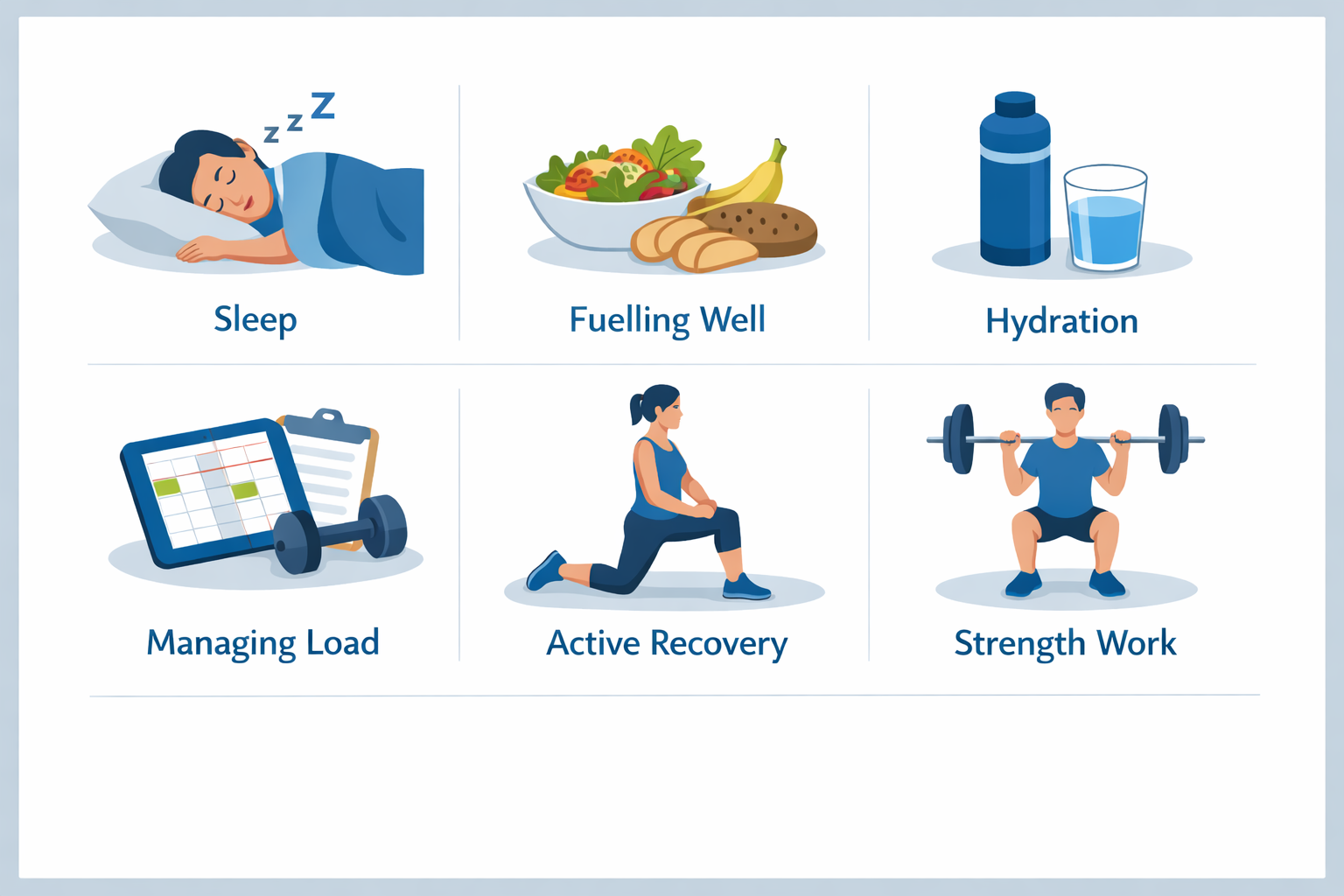
Sleep is one of the most powerful recovery tools available. This is when the body performs much of its repair and adaptation.
For athletes balancing work, study and training, improving sleep habits can make a significant difference.
The body needs energy to recover. Eating regularly and including carbohydrate and protein after training helps restore energy stores and support tissue repair.
This becomes particularly important during busy sporting seasons with multiple trainings and games each week.
Fluid intake supports circulation, temperature regulation and recovery. This is especially important during summer sports such as cricket, touch, tennis and endurance events.
One of the most common causes of injury is a sudden increase in training load.
Gradually building activity levels helps the body adapt safely. At Roslyn Physiotherapy, we often help athletes adjust their training and recovery balance so their body can cope with the demands of sport.
Light movement such as walking, easy cycling or mobility work can help reduce stiffness and support circulation between harder sessions.
The goal is to keep the body moving without adding extra fatigue.
Strength training helps the body tolerate the demands of sport. A stronger body is generally better prepared for running, jumping, tackling and repeated training loads.
This is why strength work is an important part of recovery and injury prevention.
Some muscle soreness is normal after training. However, pain that continues to build, lingers for weeks, or keeps returning is worth assessing.
At Roslyn Physiotherapy, we regularly help athletes identify why certain injuries or niggles keep appearing and guide a plan that allows them to continue participating in sport.
Recovery is not about one perfect strategy. It is about consistently getting the basics right.
Sleep, fuelling well, sensible training loads and appropriate strength work all help the body cope with the stresses of sport and recreational activity.
If your body is struggling to keep up with training or you are dealing with persistent soreness, our team at Roslyn Physiotherapy can help assess the issue and guide the next steps so you can keep doing the activities you enjoy.